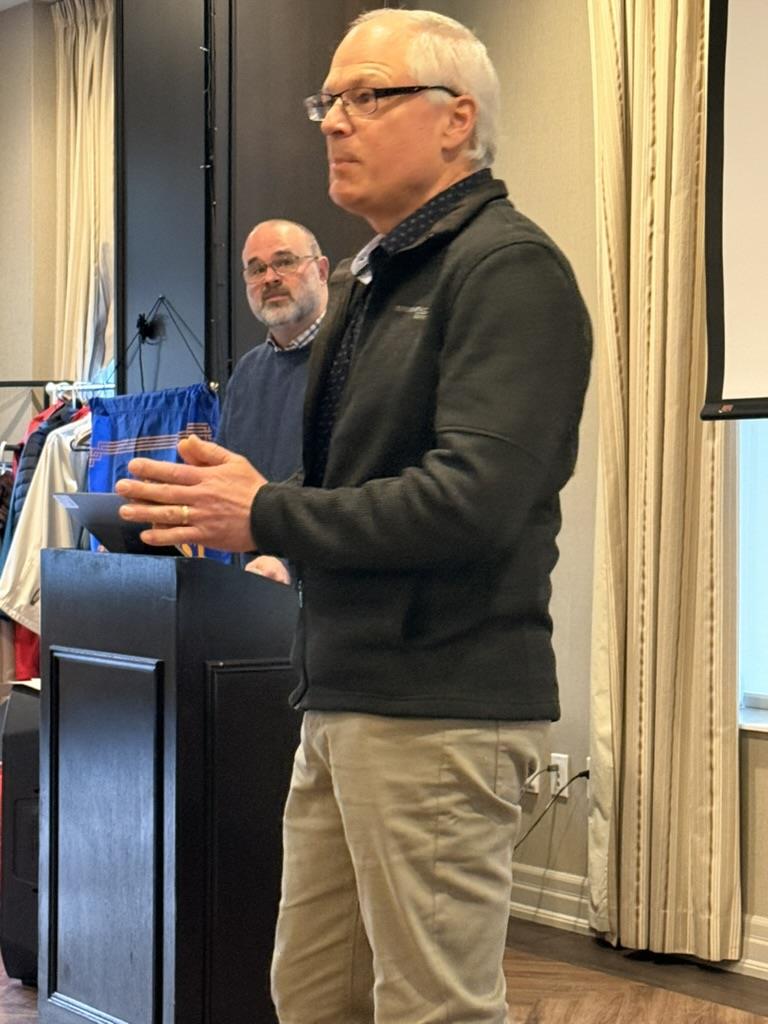
Our guest speakers were from the City of Hamilton’s Water Division, noting that March is Rotary’s Water, Sanitation and Hygiene Month — a time when Rotary clubs around the world highlight the importance of clean water, sanitation, and hygiene as essential components of public health and community development.
Tim Crowley, Manager of Capital Delivery for Hamilton Water
Sameh Kamel, Senior Project Manager for water and wastewater capital projects
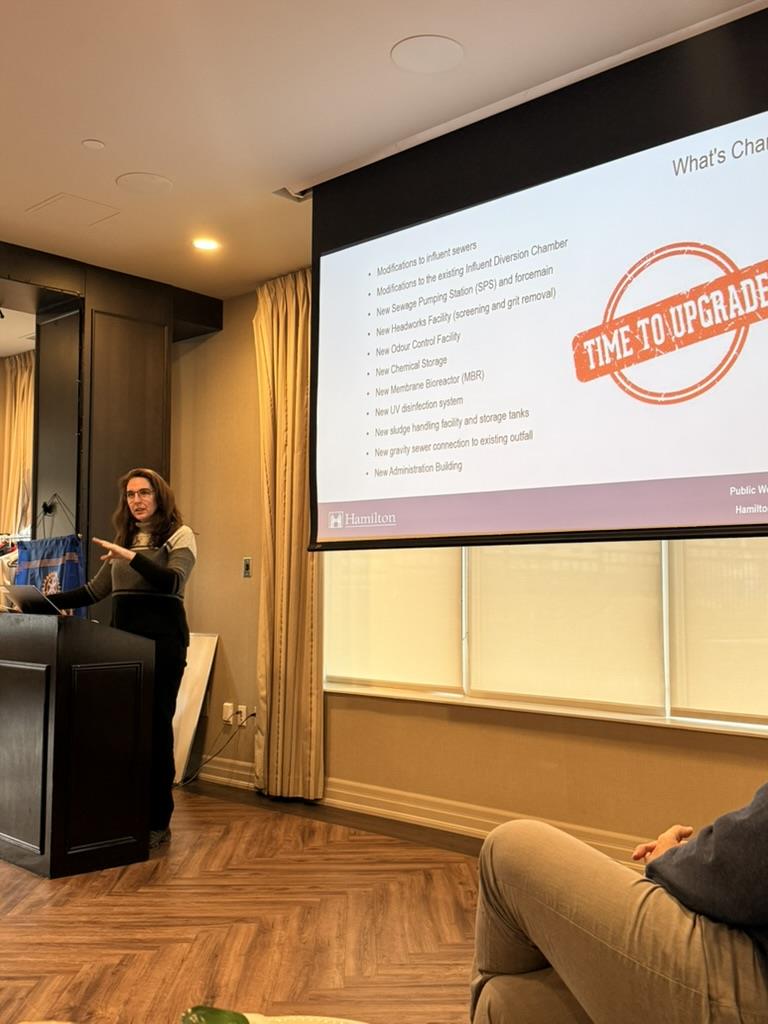
Angela Doyle, Project Manager with Hamilton Water’s Capital Delivery Section
Also joining the discussion was Mark, Director of Waste and Stormwater Services for the City of Hamilton and a Dundas resident.
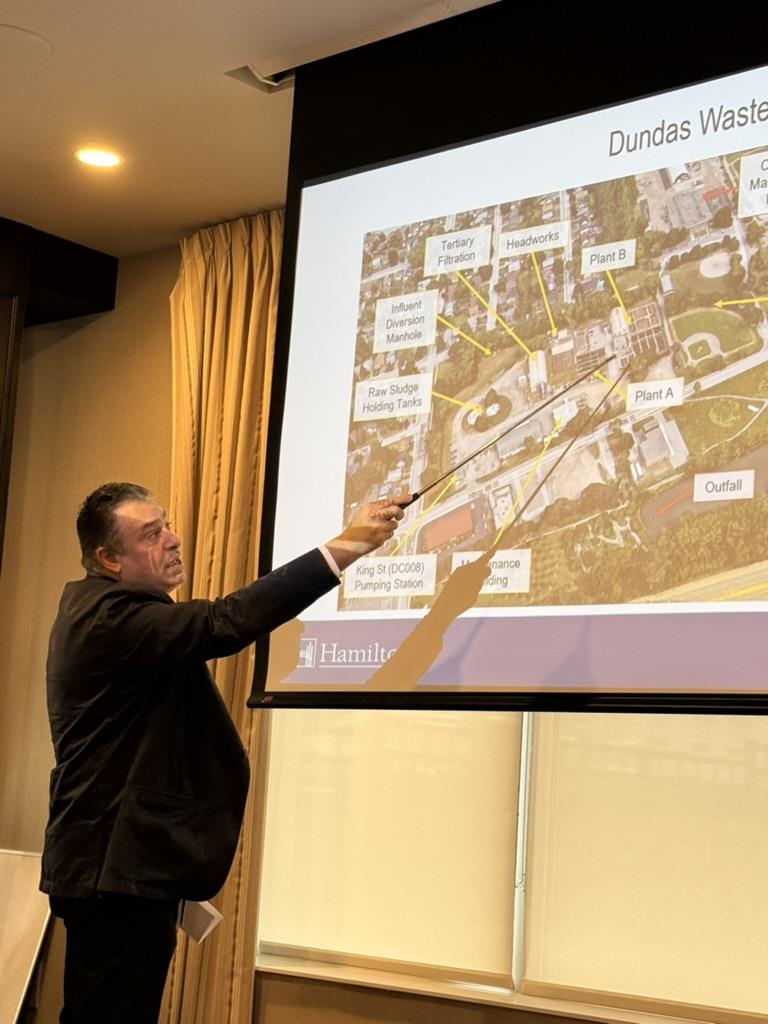
The presentation focused on both the Dundas Wastewater Treatment Plant and the City’s larger Woodward Wastewater Treatment Plant, while also providing insight into Hamilton’s broader water infrastructure.
Members learned that the Dundas facility, originally built in 1919, has reached the end of life for much of its equipment and is now due for a major modernization. Sameh Kamel is leading the Dundas Wastewater Treatment Plant Upgrade Project, which is planned for the current baseball diamond area at Martino Park, adjacent to the existing facility.
Current planning anticipates:
Design Phase: 2026–2029
Construction Phase: 2028–2033
Estimated Cost: approximately $252 million
Tim Crowley also spoke about upgrades to Hamilton’s primary treatment facility at Woodward. Historically, the Woodward plant was the largest contributor of phosphorus entering Lake Ontario, but upgrades are now underway to significantly reduce emissions.
For context, the Dundas plant currently releases phosphorus levels around 1.1, with a future target of 0.05. The Woodward facility has improved from 0.8 to approximately 0.5, with a long-term target of 0.2.
Angela Doyle shared that members of the public who wish to receive updates about the Dundas project can join the mailing list by emailing:
http://dundasWWTP@hamilton.ca
Members asked several thoughtful questions during the discussion, including how stormwater is managed, where phosphorus originates, and what risks the system faces.
Stormwater typically flows directly into local waterways such as Cootes Paradise, while wastewater is treated at municipal plants. Sources of phosphorus include wastewater and biological waste, but also natural runoff from soil and rock, as well as household products such as soaps and fertilizers.
The speakers also highlighted climate change and flooding as ongoing challenges. Many older parts of Hamilton still operate on combined sewer systems, where stormwater and wastewater share the same pipes. During large storms this can create overflow risks. The City continues working to separate these systems, though the process is expensive and complex. To date, approximately 40% of Hamilton’s combined sewer systems have been separated.
Members appreciated the informative presentation and the opportunity to learn more about the infrastructure that quietly supports the health and environmental wellbeing of our community.