Gerdau Steel Cambridge
Posted by Ralph Montesanto
on Jul 30, 2013
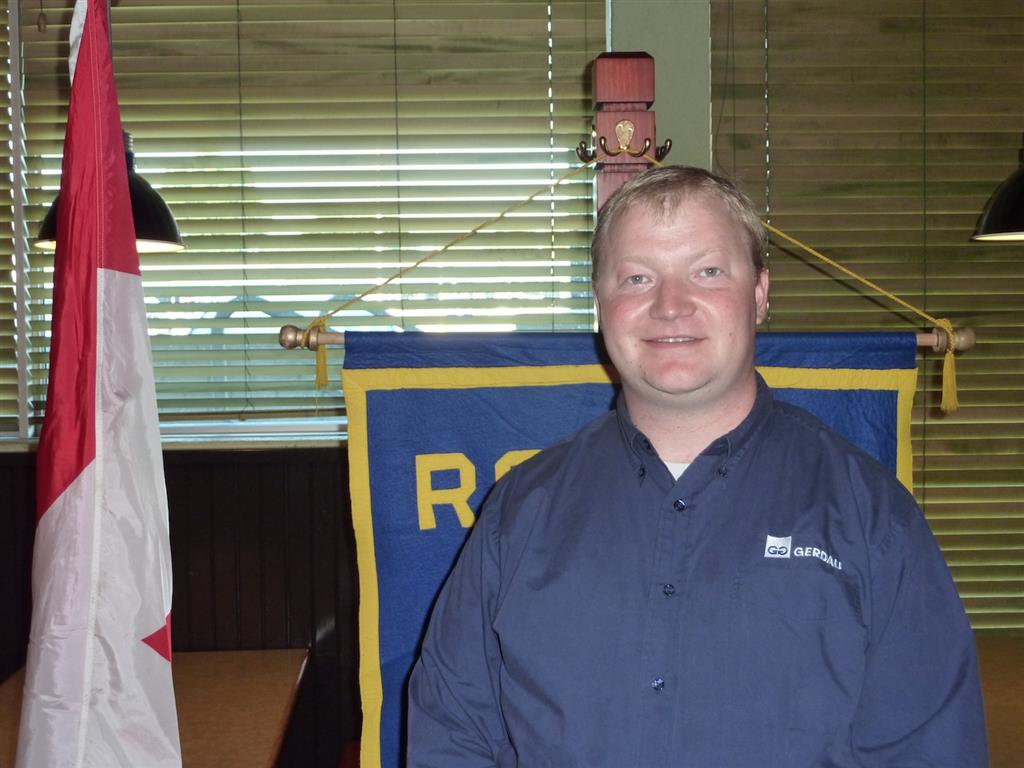
Dayton Bell, environmental manager at Gerdau Steel in Cambridge, gave an enlightening presentation on mini-mill steel making. Gerdau Steel is an international steel company that recently celebrated its 112th year in business. It has plants throughout the Americas as well as Europe and Asia. It is the 10th largest steel company in the world with 45 000 employees and produces 25 million tons of steel. The Cambridge plant has 245 employees and a capacity for 300 000 tons.
As environmental manager Dayton made contact with the Dundas Valley Sunrise Rotary Club through Dave Carson and the rain barrel sale. Dayton purchased a number of rain barrels for an employee draw as part of the plant's Earth Week program. Environmentally, the plant uses methane from an old city dump to mix with natural gas in the preheating of scrap metal used in the electric arc furnaces.
Mini-mills use electricity to melt scrap. He compared integrated mills like the large steel plants we see in Hamilton to mini-mills. Integrated mills have a huge capital investment, use coal (coke) and iron ore, produce several million tons of steel per year and need to be close to rail or ship transportation. On the other hand, mini-mills require a much smaller capital investment, use electricity and scrap metal, and produce smaller amounts of steel that are then rolled into a large variety of specialty sizes. The biggest difference in the steel produced is that integrated mills using iron ore have fewer impurities and can be rolled thinner.
The other big difference is an integrated plant cost millions of dollars to shut down and restart whereas a mini-mill can shut down and restart as part of its normal operation. In fact, the Cambridge plant works with its electricity suppliers to shut down when required to lessen the electrical load during high peak days.
Derek Price thanked Dayton for his informative and interesting presentation and said it was great to hear from an organization that was making money rather than asking for money.
As environmental manager Dayton made contact with the Dundas Valley Sunrise Rotary Club through Dave Carson and the rain barrel sale. Dayton purchased a number of rain barrels for an employee draw as part of the plant's Earth Week program. Environmentally, the plant uses methane from an old city dump to mix with natural gas in the preheating of scrap metal used in the electric arc furnaces.
Mini-mills use electricity to melt scrap. He compared integrated mills like the large steel plants we see in Hamilton to mini-mills. Integrated mills have a huge capital investment, use coal (coke) and iron ore, produce several million tons of steel per year and need to be close to rail or ship transportation. On the other hand, mini-mills require a much smaller capital investment, use electricity and scrap metal, and produce smaller amounts of steel that are then rolled into a large variety of specialty sizes. The biggest difference in the steel produced is that integrated mills using iron ore have fewer impurities and can be rolled thinner.
The other big difference is an integrated plant cost millions of dollars to shut down and restart whereas a mini-mill can shut down and restart as part of its normal operation. In fact, the Cambridge plant works with its electricity suppliers to shut down when required to lessen the electrical load during high peak days.
Derek Price thanked Dayton for his informative and interesting presentation and said it was great to hear from an organization that was making money rather than asking for money.