Donna Cripps CEO Explains LHIN
Posted by Ralph Montesanto
on Feb 21, 2012
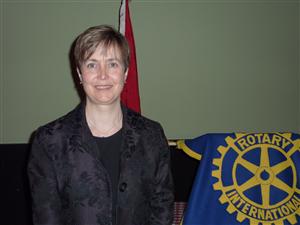
Michael Shea, Chair of the Local Health Integration Network, introduced Donna Cripps the CEO who gave an overview of the LHIN. The Hamilton Niagara Haldimand Brant LHIN is one of 14 in the province. It covers 6600sq. km and serves 1.4 million residents. It has the oldest population of the 14 LHINs and some of the sickest individuals. Its function is to plan, fund and integrate health care while always considering the experience of the patient progressing through the various service providers.
With 10 hospital corporations, 86 long-term care facilities and 138 other health care providers the LHIN manages a $2.6 billion dollar budget of which $5 million goes to administration costs. Its nine member board of directors is appointed from the local population by an Order in Council.
The key principles under which it operates are local decision making, a coordinated approach to health care management, a reduction in duplication, improved access and public accountability and transparency. Thirty-three FTE employees replaced the 80 that ran the previous organizations and operates through an agreement with the Ministry of Health and Long-Term Care, and, formal agreements with each of the health care agencies within its jurisdiction.
The Access-Restore Program, Rapid Access Clinics, Alternate Level of Care, and Community Referral by Emergency Medical Services are just several ways LHINs are working to reduce health care costs while improving patient service.
Members suggested several ways to further improve patient care and Donna agreed the suggestions were positive and would be considered.
With 10 hospital corporations, 86 long-term care facilities and 138 other health care providers the LHIN manages a $2.6 billion dollar budget of which $5 million goes to administration costs. Its nine member board of directors is appointed from the local population by an Order in Council.
The key principles under which it operates are local decision making, a coordinated approach to health care management, a reduction in duplication, improved access and public accountability and transparency. Thirty-three FTE employees replaced the 80 that ran the previous organizations and operates through an agreement with the Ministry of Health and Long-Term Care, and, formal agreements with each of the health care agencies within its jurisdiction.
The Access-Restore Program, Rapid Access Clinics, Alternate Level of Care, and Community Referral by Emergency Medical Services are just several ways LHINs are working to reduce health care costs while improving patient service.
Members suggested several ways to further improve patient care and Donna agreed the suggestions were positive and would be considered.